
This article is for readers in Ann Arbor, Michigan who are weighing microneedling for hair loss. It sticks to what a published review says and flags what to ask before you commit.
What the review says
According to pmc.ncbi.nlm.nih.gov, "Moreover, microneedling treats hair loss conditions, such as androgenetic alopecia." The same source says, "The procedure stimulates the scalp, promoting increased blood flow and the release of growth factors that encourage hair regrowth."
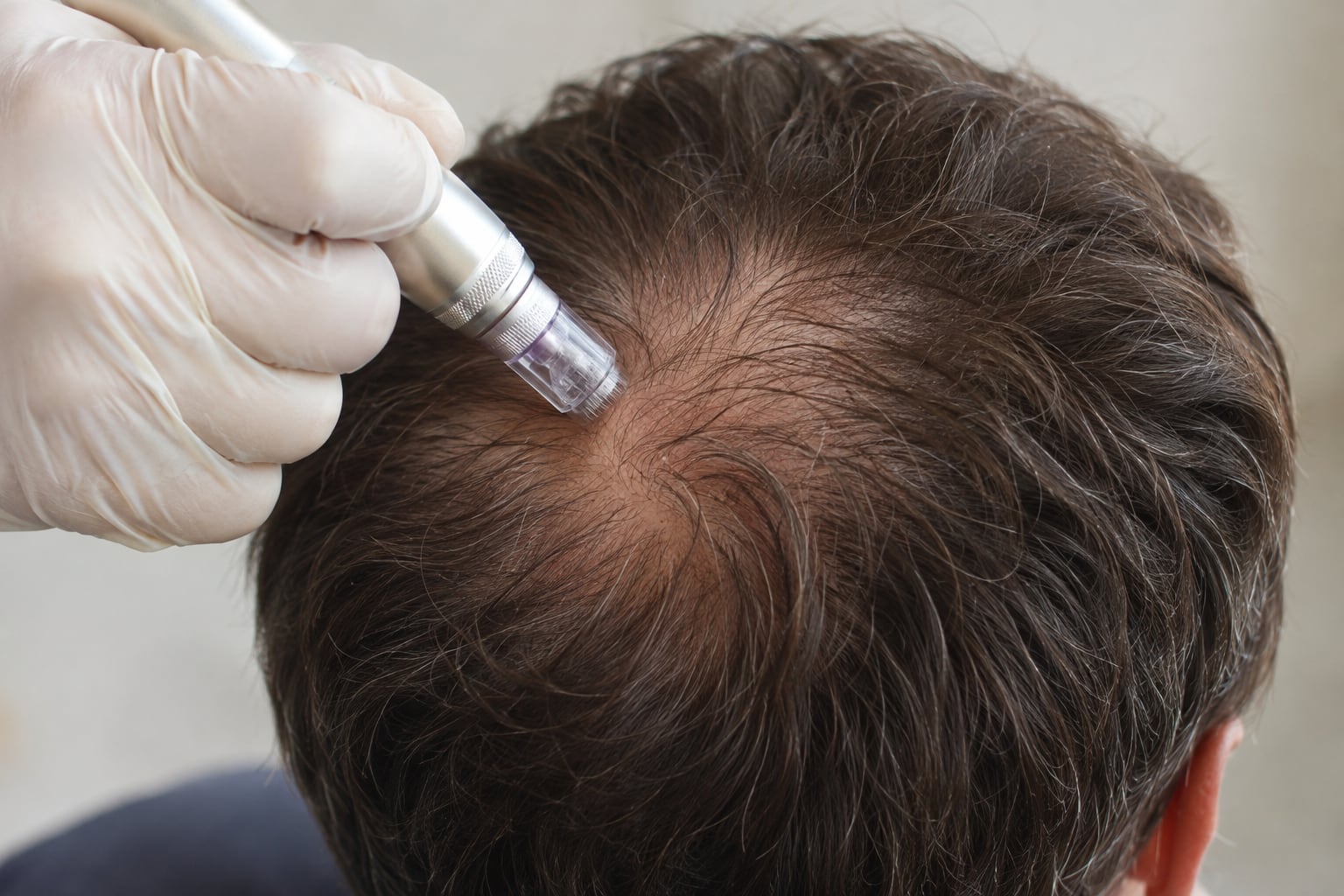
Where those sentences come from
Both statements appear in Microneedling in Dermatology: A Comprehensive Review of Applications, Techniques, and Outcomes, a review that spans several uses of the tool.
What a stimulation claim leaves open
A sentence that says a procedure stimulates the scalp tells you what it is meant to do. It does not tell you how many sessions to plan for, or how long a result is expected to hold. Ask your provider for the session schedule and the upkeep plan in plain terms before you book.
Placing microneedling among the other choices
Microneedling is one route among several. This overview of hair loss treatments, from topical options to surgery lets you set it beside the alternatives and ask how each one compares on upkeep.
How to read the word "treats"
The word "treats" in a source sentence is a starting point. It does not say who was studied, how long they were followed, or how often they went back. Ask your provider to show you those details for the plan they are proposing.
The same tool, a different skin concern
A systematic review comparing microneedling and chemical peels for atrophic acne scars shows microneedling studied for another purpose. Its subject is acne scarring, so read it as context on the tool, not as a hair-loss result.
The question to ask before committing
Ask what the plan costs in sessions and upkeep over the next year, and what the provider will do if the scalp does not respond the way they expect.